

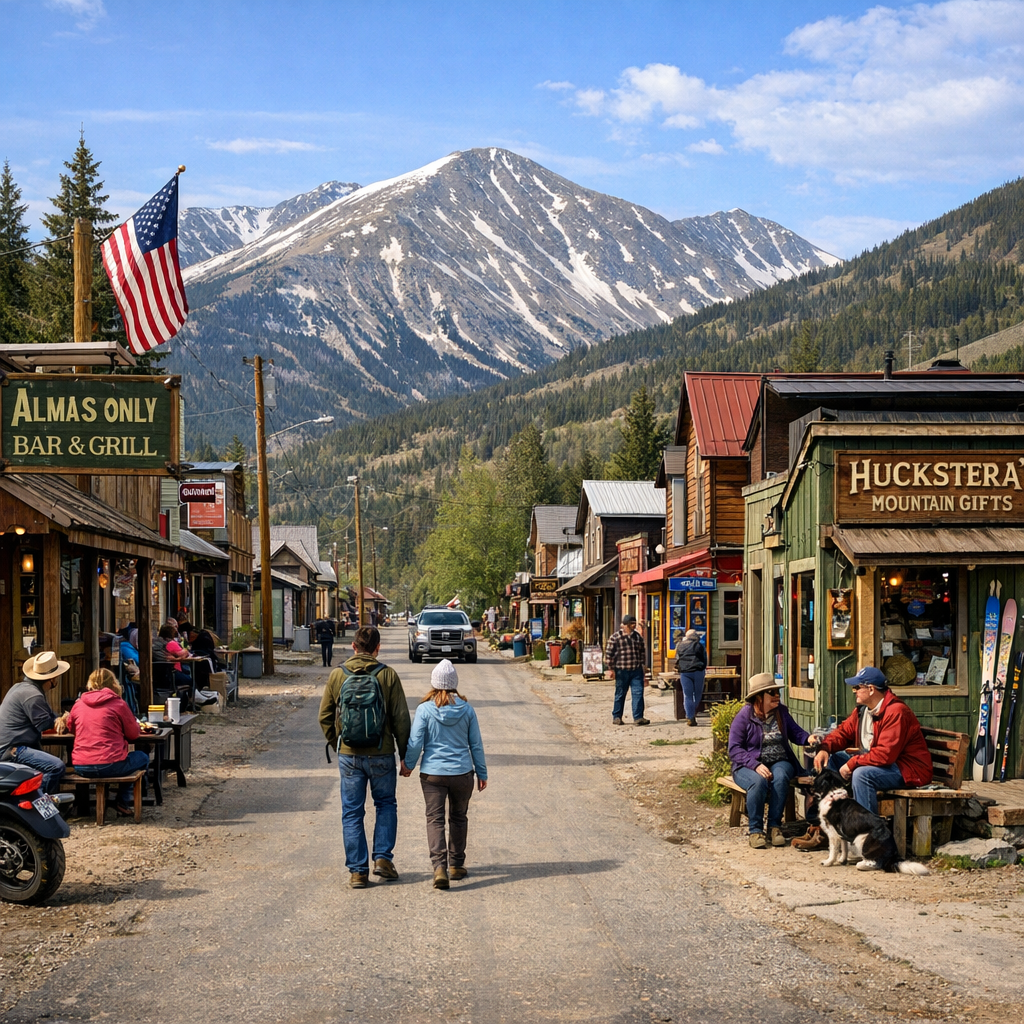
Alma, Colorado, renowned as the highest incorporated town in the United States, offers a unique blend of small-town charm and economic activity. This article provides an overview of the local business environment, employment sectors, and housing market trends that shape our community.
Local Businesses: The Heart of Alma
At the core of Alma’s economy are its local businesses, which cater to both residents and visitors. A notable example is the Al-Mart General Store, a family-owned establishment located in the historic Silverheels building at 11 South Main Street. Since its inception in 2007, Al-Mart has become a community hub, offering a wide range of products and serving as a gathering place for locals and tourists alike. The store’s motto, “If We Don’t Have it, You Don’t Need It!!”, reflects its commitment to meeting the diverse needs of the community. Learn more about Al-Mart.
In addition to Al-Mart, Main Street hosts several other businesses that contribute to the town’s vibrant atmosphere. The Bristlecone Bake Shop and The Black Kettle Coffee Shop are popular spots for residents to enjoy baked goods and coffee, fostering a sense of community and providing spaces for social interaction. Discover more about Alma’s local businesses.
Employment Landscape
Alma’s employment landscape is characterized by a diverse range of industries. As of 2024, the town employed approximately 258 people, with the largest sectors being:
- Construction: Employing 73 individuals, this sector plays a significant role in the local economy, offering opportunities for skilled labor and contributing to infrastructure development.
- Manufacturing: With 59 employees, manufacturing provides stable employment and supports the production of goods within the community.
- Accommodation and Food Services: This sector employs 30 people, highlighting the importance of tourism and hospitality in Alma’s economy. Local establishments like the Bristlecone Bake Shop and The Black Kettle Coffee Shop are integral to this industry. Explore more about Alma’s employment sectors.
Notably, the construction industry stands out as the highest-paying sector, with an average annual income of $100,871, reflecting the demand for skilled labor in this field.
Housing Market Trends
The housing market in Alma has experienced notable changes in recent years. As of March 2026, the median listing price for homes was $625,000, marking an 18.24% decrease from the previous year. This decline suggests a shift towards a buyer’s market, offering potential opportunities for those looking to invest in property. View current housing market data.
Additionally, the median days on the market for homes increased to 147 days, indicating a slower pace in property sales. This trend may provide buyers with more negotiating power and a wider selection of available properties.
In terms of rental properties, the market has seen a 50% decrease in available listings, with only four properties available as of March 2026. This reduction highlights a tightening rental market, which could impact affordability and availability for prospective tenants.
Conclusion
Alma’s economic landscape is shaped by its resilient local businesses, diverse employment sectors, and evolving housing market. The community’s commitment to supporting local enterprises and adapting to economic shifts ensures that Alma remains a vibrant and welcoming place for residents and visitors alike.