

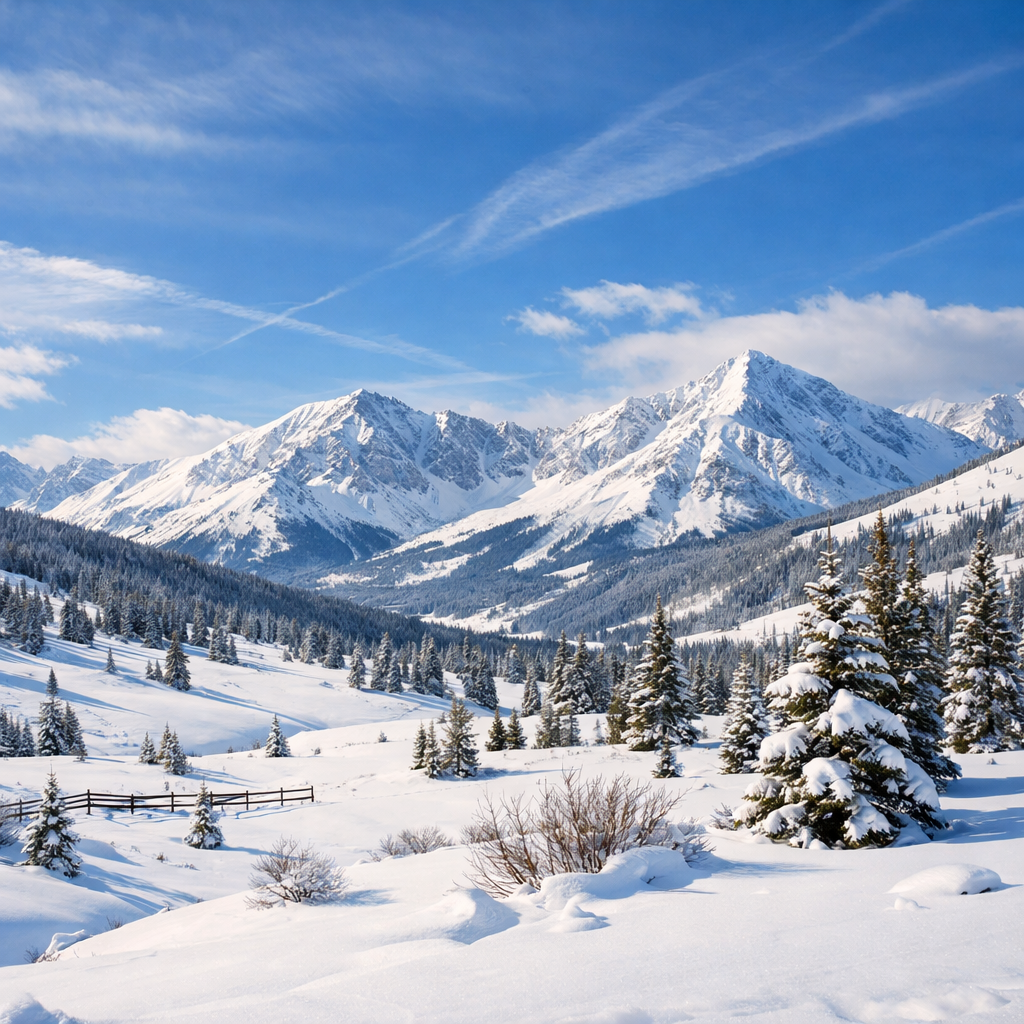
Living in Alma means adapting to a climate that’s strikingly different because of our elevation—10,578 feet. Our weather and environment are deeply driven by snow, sunshine, and shifting seasons.
Seasonal Patterns at High Altitude
We experience long, snowy winters—with cold, often below-freezing days extending from late October through April at higher elevations. Summers are relatively short: days can be warm and bright, but nights are always chilly. Spring and autumn act more like neutral ground—short, cool, and often unpredictable.
Snow, Melt, and Water Supply
Snowpack—how much snow accumulates over the winter—is like nature’s savings account. It melts in spring and early summer, feeding streams, rivers, and soil moisture that carry us through the drier months. At Alma’s elevation, snow often lingers into June in shaded or flat terrain, providing critical moisture after the heavy snow has melted elsewhere.
Environmental Shifts: What We’re Observing
Climate trends across Colorado show rising temperatures over recent decades. On average, Alma (along with other high-elevation zones) is warming, and spring snowmelt is occurring increasingly earlier than in past years. These changes ripple through the ecosystem, affecting plant cycles, wildlife behavior, and water availability.
Growing Season & Alpine Ecosystems
A longer warm season—if it persists—could allow woody plants to edge upward, encroaching on fragile alpine tundra. Still, many alpine and subalpine species rely on cues like day length and snowmelt more than just temperature. So even with more heat, changes in ecosystem structure tend to be gradual—but noticeable over years.
Drought, Wildfire & Soil Moisture
Dry soils tend to warm faster and retain less water, which can intensify drought during dry spells. Combined with more frequent summer thunderstorms, this creates a greater risk for wildfires. Post-fire landscapes—barren and exposed—often experience reduced soil absorption and greater runoff, increasing erosion and impacting downstream water quality.
Preparing for Changes—What Alma Can Do
- Water management: Track snowpack and runoff carefully so that we can plan for shortages in summer.
- Wildfire readiness: Maintain defensible space around structures; know escape routes; support local fire mitigation programs.
- Protect alpine zones: Limit disturbance from recreation; support conservation policies that guard fragile ecosystems.
- Local awareness: Monitor temperature and precipitation shifts; engage residents and visitors in environmental education.
Alma’s environment is breathtaking—but it’s also in flux. Keeping an eye on snow, soil, plants, and weather isn’t just scientific: it’s part of community survival and thriving in the thin air.