

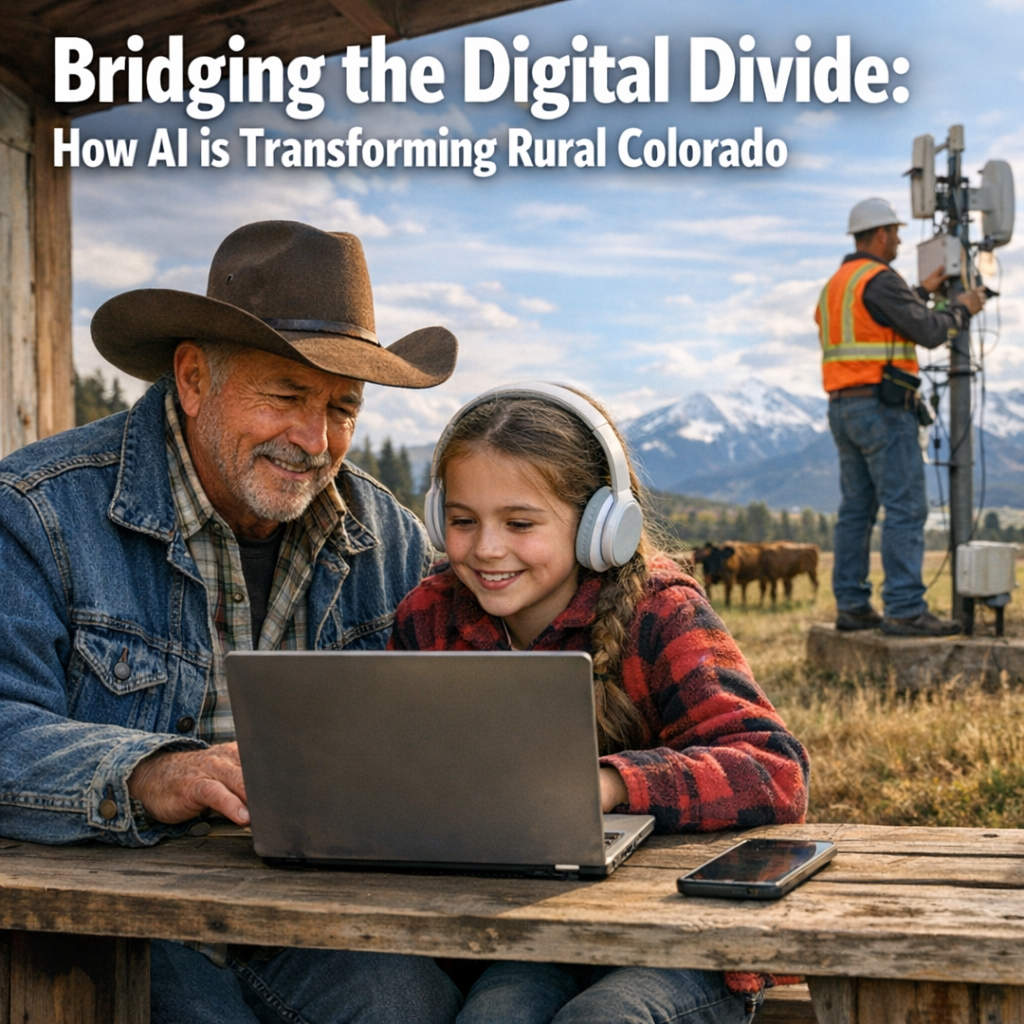
Artificial Intelligence (AI) is no longer confined to urban tech hubs; it’s making significant inroads into rural communities, including those in Colorado. This technological shift offers both opportunities and challenges for towns like Alma.
AI’s Role in Rural Education
In Colorado Springs, the D-11 Colorado Springs School of Technology (CSST) recently experimented with Anthropic’s AI model, Claude, to enhance educational experiences. Although the initiative faced hurdles, it underscored the potential of AI in rural education settings. Principal Nathan Gorsch emphasized the importance of AI fluency for students, highlighting the need for responsible integration of such technologies. Read more
Economic Impacts and Opportunities
AI is also influencing rural economies. The OECD notes that digitalization can reduce the cost of moving people and goods, making rural environments more competitive and attractive for businesses. However, without a forward-looking approach, technological change can negatively impact growth opportunities in rural regions and increase the urban-rural income disparity. Learn more
Statewide AI Initiatives
Colorado’s government is proactively embracing AI. Governor Jared Polis has implemented a “bullish with guardrails” strategy, encouraging AI use while placing firm limits on its application, particularly prohibiting its involvement in consequential decision-making processes. This balanced approach aims to harness AI’s benefits while safeguarding public interests. Details here
Looking Ahead
As AI continues to evolve, its integration into rural Colorado presents a unique opportunity to bridge the digital divide. By embracing AI responsibly, communities like Alma can enhance education, stimulate economic growth, and improve overall quality of life.