

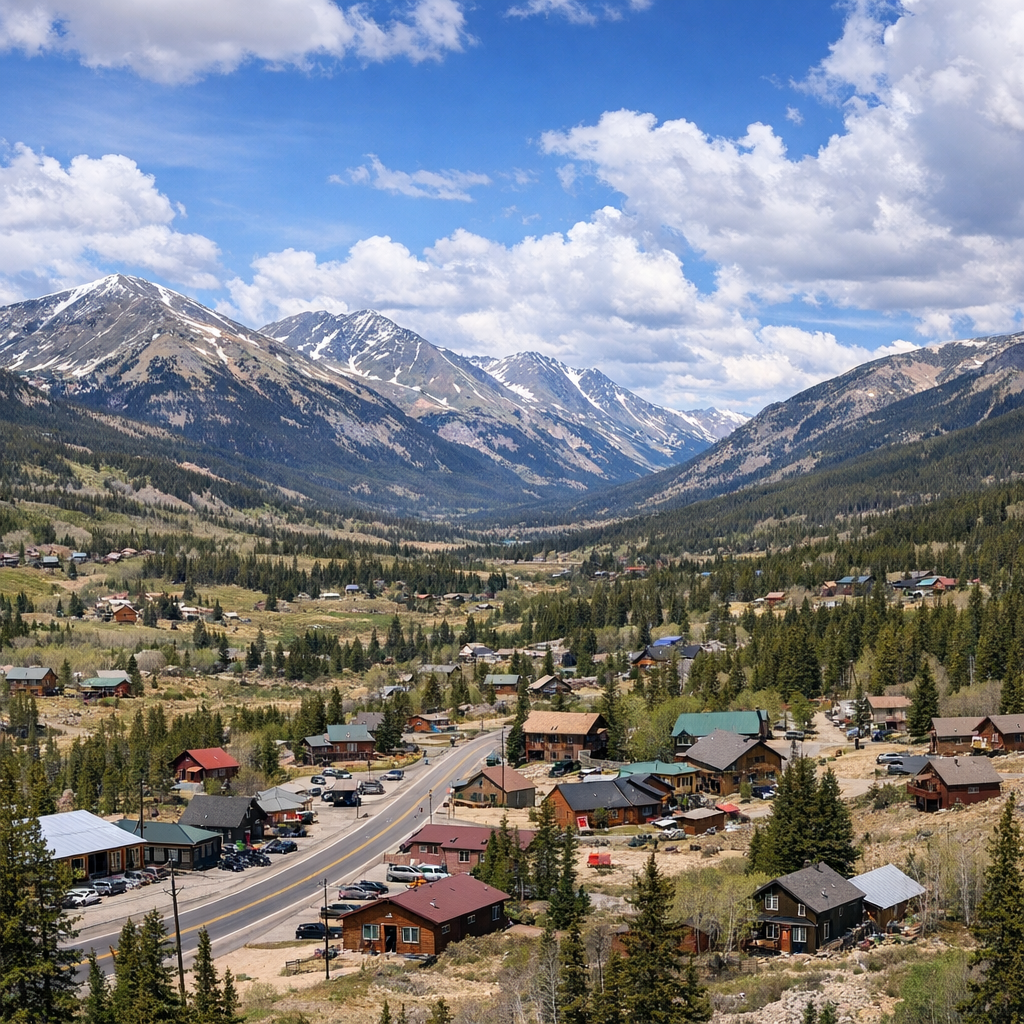
Alma, Colorado, nestled at an elevation of approximately 10,578 feet, boasts a subarctic climate characterized by cool summers and year-round precipitation. This unique climate presents both opportunities and challenges for residents and the local environment.
Climate Overview
Alma experiences average annual high temperatures around 47.8°F and lows near 24.1°F. The town receives an average annual precipitation of 19.9 inches, with the wettest months being July and August due to increased thunderstorm activity. The growing season is notably short, typically spanning from early June to late August, placing Alma in USDA Plant Hardiness Zone 5b.
Environmental Impacts
The high elevation and climate conditions in Alma significantly influence the local environment. Intense mountain exposure affects various aspects of homes, including roof coverings, exterior siding, decks, and windows. Snow accumulation, drifting, wind exposure, and freeze-thaw cycles can impact roofing, gutters, drainage paths, and foundation walls.
Drainage is a critical concern in Alma, especially for properties situated on sloped or irregular lots. Rapid water movement during snowmelt and storms can lead to issues such as negative grading near foundations, improper downspout discharge, and crawlspace dampness. Addressing these concerns is essential to maintain structural integrity and indoor air quality.
Community Initiatives
Recognizing the environmental challenges posed by its climate, Alma has undertaken initiatives to improve local infrastructure. For instance, the town’s wastewater treatment facility has been evaluated for enhancements to better manage ammonia and phosphorus discharge limits, ensuring compliance with environmental standards and promoting sustainability.
Understanding Alma’s unique climate and its environmental implications is vital for residents and policymakers alike. By acknowledging these factors, the community can implement strategies to mitigate challenges and foster a sustainable living environment.